Anthropic previews the Model Hardware Standard for AI agents operating lab equipment
On August 27, 2026 Anthropic previewed the Model Hardware Standard (MHS), a specification that lets AI agents safely discover, operate and troubleshoot physical equipment such as microscopes, liquid handlers and robotic arms. It was developed with HHMI Janelia Research Campus and is Anthropic's first move into physical AI.
Key facts
- Research preview announced Aug 27, 2026
- Co-developed with HHMI Janelia; one rig unified seven vendor programs
- Launch partners incl. Genentech, UW (Baker and Pinglay labs), Carnegie Mellon, QuEra, Tetsuwan Scientific
- Vendors preparing integrations: AWS (Strands Robots), Danaher, Tecan, QIAGEN, Doosan Robotics, Universal Robots, Hugging Face LeRobot, Raspberry Pi and others
What happened
MHS lets agents run several instruments in parallel for tasks from routine drug-discovery experiments to laser calibration on a quantum computer, cutting integration work to hours or minutes. The same day Anthropic announced expanded support for scientists.
Why it matters
This is a standardization bid for agent control of the physical world, starting with labs and manufacturing.
Changelog
- 2026-09-29: created
Videos (2)
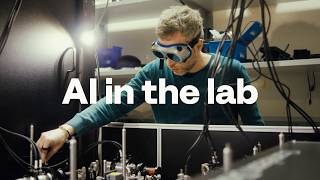
AI models can now help run physical science experiments
Anthropic · 2026-08-27 · officialDescription by Gemini, which watched the video:
Summary
Anthropic presents "Model Hardware Standard" (MHS), an open protocol designed to allow AI models like Claude to directly interface with and control physical laboratory hardware and scientific instrumentation. Anthropic technical staff members Alek Kemeny and Gagan Bhat document real-world tests and collaborations with researchers at HHMI Janelia Research Campus, Leica Microsystems (Danaher Corporation), and Genentech across neuroscience, robotic manipulation, live microscopy, and automated drug discovery.
What is shown
- [01:10 - 02:30] Dr. Arco Bast at HHMI Janelia Research Campus demonstrates his custom-built multiphoton laser-scanning microscope used for live brain imaging, highlighting the challenge of synchronizing diverse hardware components.
- [02:35 - 03:05] The Anthropic team collaborates with Janelia to establish the initial Model Hardware Standard communication layer, testing remote stage control and laser activation.
- [03:10 - 04:30] In Anthropic's office, Gagan Bhat connects Claude via MHS to a multi-axis robotic arm, establishing a 3D safety bounding box ("Safety Range Visualizer") that blocks out-of-bounds motions before commanding Claude to locate and grasp a beverage can.
- [04:35 - 06:14] At Danaher/Leica Microsystems, engineers connect Claude to a Leica research microscope; Claude navigates the sample, focuses, and interprets stained botanical cell wall structures (differentiating lignified xylem vessels from parenchymal cells).
- [06:40 - 07:49] Claude generates a Python script and a live user interface to autonomously track a swimming micro-organism (diatom) in real time under the microscope for several minutes.
- [08:22 - 10:25] At Genentech, researchers connect Claude to high-throughput liquid-handling platforms; Claude detects air bubbles inside 96-well microplates and adjusts pipetting parameters in a closed-loop sequence to reduce volume transfer errors.
Claims & numbers
- Time spent on experimental setup: Alek Kemeny states that building experiments, setting up devices, and debugging hardware/software consumes "maybe 80% of a scientist's time" [00:23].
- Setup efficiency for PhD researchers: A Danaher team member claims that setting up such dynamic systems typically takes a PhD researcher "two years to get it running," whereas with this prototyping framework "he only needs two months" [07:58].
- High-throughput screening scale: Margaret Porter Scott notes that Genentech tests "thousands, or even hundreds of thousands, or even millions of molecules to find the right molecule" [08:44].
Notable quotes
- [02:23] Alek Kemeny: "This idea could be used to have AI run any science experiment in the world."
- [04:18] Gagan Bhat: "The mere fact that I was able to build this from scratch today, and it achieved it in a matter of minutes—that's insane."
- [06:19] Luciano Guerreiro Lucas: "Claude walked in, we told him nothing, and it was just trying to figure it out."
Assessment
This is an official demonstration documentary by Anthropic illustrating early practical integrations of Claude with lab automation and scientific instruments. The trials depict real laboratory interactions—including terminal execution logs, UI development, and mechanical safety intercepts—presented through a professionally edited promotional narrative highlighting successful test runs.
Described by gemini-3.8-flash on 2026-09-29 from the video's audio and frames.
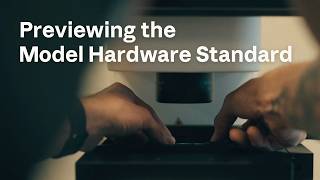
Model Hardware Standard: AI operating physical equipment
Anthropic · 2026-08-27 · officialDescription by Gemini, which watched the video:
Summary
Anthropic's Alek Kemeny and HHMI Janelia Research Campus postdoctoral scientist Dr. Arco Bast introduce the Model Hardware Standard (MHS), an open interface standard designed to connect AI models directly to laboratory and physical instruments. The video highlights collaborative implementations with partners like Danaher, Genentech, and HHMI Janelia, illustrating how AI agents such as Claude can autonomously control equipment and run scientific experiments.
What is shown
- [00:00] Manual preparation of a specimen slide on a Leica microscope.
- [00:09] Title card: "Previewing the Model Hardware Standard".
- [00:31] Architectural diagram of lab setup "Before MHS," showing tangled, custom point-to-point software integrations across microscopes, control PCs, cameras, centrifuges, and sensors.
- [00:46] Architectural diagram of "After MHS," illustrating an AI agent communicating through a single MHS interface linked to all laboratory hardware.
- [01:06] Danaher demonstration: Claude executing terminal commands to control a Leica microscope stage, focus, scan slides, detect bacteria, and select imaging targets.
- [01:15] Genentech demonstration: Footage of robotic liquid handlers and lab automation monitoring screens executing an experiment parsed from a PDF.
- [01:41] HHMI Janelia demonstration: Real-time neural imaging in brain tissue, showing Claude directing microscope navigation, depth adjustment, and angle capture.
Claims & numbers
- Arco Bast states that experiments that previously took weeks now take days with AI hardware integration [00:01].
- Bast claims that prior to MHS, developing custom software integrations for complicated multi-device experiments required weeks of work [00:43].
- Bast states that under MHS, devices communicate at bare-metal speed [00:59].
- Alek Kemeny claims that at Genentech, an experiment outlined in a PDF was autonomously executed by Claude, which successfully recovered from errors overnight [01:17].
- Kemeny states that accelerating scientific iteration through MHS can help compress "a century of progress... into a decade" [02:05].
Notable quotes
- "There's no common way to connect a model to physical equipment. The Model Hardware Standard changes that." — Alek Kemeny [00:19]
- "MHS gives any AI model one standard way to connect with and operate devices." — Arco Bast, MD [00:25]
- "This is how a century of progress can compress into a decade." — Alek Kemeny [02:05]
Assessment
This is an official promotional preview produced jointly by Anthropic and the HHMI Janelia Research Campus. While real workflow captures (terminal outputs, live microscopy, automated lab machinery) are displayed, the footage is presented as a polished highlight reel rather than an unbroken, end-to-end technical demonstration.
Described by gemini-3.8-flash on 2026-09-29 from the video's audio and frames.
Related posts (1)
- Anthropic launches research preview of the Model Hardware Standard (MHS) Anthropic @AnthropicAI · x · 2026-08-27
A proposed standard for AI agents to safely operate physical lab and manufacturing equipment, a precursor to Anthropic's wet-lab work.
Related events
- Claude agents discover a novel CRISPR-like enzyme system; Anthropic reveals its own biology wet lab ★★★★
Sources (3)
- officialPreviewing the Model Hardware Standard (Anthropic)
- pressFortune: Anthropic makes first move into physical AI
- videoAI models can now help run physical science experiments (video)
id: 2026-08-27-anthropic-model-hardware-standard · updated 2026-09-29 · open in the interactive timeline